
Welcome back!
You're currently shopping with your default address:
You're currently using an unsupported browser, which may impact the sites display and prevent key functionality. Update your browser now for greater security, speed, and the best experience on this site. View supported browsers.


Plan for 1 to 1.5 pounds of turkey per person. This accounts for bones and ensures leftovers. For 8 people, choose a 12-14 lb turkey. For larger gatherings, consider two smaller turkeys instead of one very large one for more even cooking.
Two smaller turkeys (10-12 lbs each) cook more evenly than one 20+ lb turkey
Pre-ordering is essential for fresh turkeys. Place your order 2-3 weeks before Thanksgiving at Safeway or your local grocery store. Most locations require advance orders for fresh turkeys, especially during busy holiday periods. For best quality, pick up fresh turkeys 1-2 days before cooking. While USDA guidelines permit refrigerated storage up to 4 days, earlier pickup ensures optimal freshness.
Order fresh turkeys 2-3 weeks ahead, but pick up only 1-2 days before cooking
Fresh turkeys offer convenience (no thawing time) and slightly better texture, but cost more and require pre-ordering 2-3 weeks in advance. Frozen turkeys are more economical and available year-round, but require 2-4 days of thawing time in the refrigerator.
Frozen turkeys go on sale weeks before holidays - buy 1-2 weeks ahead for best prices
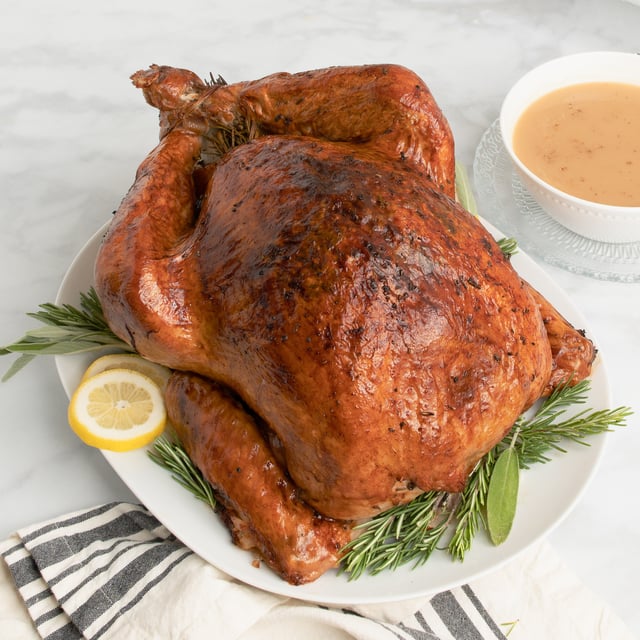
Choose turkeys with plump, rounded breasts and creamy white to pale yellow skin. Avoid turkeys with bruising, torn skin, or excessive liquid in the packaging. Check the expiration date and ensure frozen turkeys are solidly frozen with no ice crystals indicating thaw/refreeze cycles.
Avoid 'kosher,' 'self-basting,' or 'enhanced' turkeys if you plan to brine - they're already pre-brined
Place frozen turkey on a tray in the refrigerator. Allow 24 hours for every 4-5 pounds. A 12-pound turkey needs 3 days, while a 20-pound turkey needs 4-5 days. Keep turkey in original wrapper and ensure refrigerator temperature is 40°F or below.
Thawed turkey can stay in refrigerator safely for 1-2 days before cooking
Submerge turkey in cold water, changing water every 30 minutes. Allow 30 minutes per pound. Turkey must be in leak-proof packaging. A 12-pound turkey takes 6 hours. Cook immediately after thawing - do not refreeze.
Never use warm or hot water - this promotes dangerous bacterial growth
Never thaw turkey at room temperature, in warm water, in the garage, basement, or any uncontrolled temperature environment. These methods allow dangerous bacteria to multiply rapidly in the outer layers while the inside remains frozen.
Simply rub salt and seasonings all over the turkey and refrigerate 1-3 days. Dry brining is easier, takes less fridge space, creates crispier skin, and eliminates the mess of wet brining. Use 1 tablespoon kosher salt per 5 pounds of turkey (or 1 teaspoon per pound). Pat turkey dry first, then rub salt mixture under and over skin.
Dry brine 3 days ahead for maximum flavor penetration and moisture retention
Dissolve salt in water and submerge the entire turkey for 12-24 hours. Wet brining requires a large container, lots of fridge space, and can be messy. It adds more moisture but may result in less crispy skin. Use 1 cup salt per gallon of water. Turkey must be completely submerged.
Use a clean cooler with ice if your fridge doesn't have room for wet brining
Never brine turkeys labeled as 'kosher,' 'self-basting,' 'enhanced,' or 'injected' - they're already pre-brined with salt solutions. Adding more salt will make them overly salty. These turkeys can be cooked directly without additional brining. Check labels carefully when shopping.
Look for 'all-natural' or 'organic' turkeys if you want to brine yourself
You can make excellent turkey without brining. Season generously with salt, pepper, and herbs 1-24 hours before cooking. Focus on proper cooking temperature (325°F), accurate internal temperature (165°F), and adequate resting time (20-30 minutes) for juicy results.
Remove turkey from packaging and check both the neck cavity and body cavity for giblet packages (neck, gizzard, heart, liver). Pat turkey completely dry inside and out with paper towels. Never rinse the turkey as this spreads bacteria.
Washing raw turkey spreads harmful bacteria up to 3 feet around your sink
Season the cavity with salt and pepper. For the skin, you can use butter or oil mixed with herbs like sage, thyme, and rosemary. Season generously with salt and pepper. For extra flavor, gently loosen skin and rub seasoning directly on the meat.
Season 24 hours ahead and refrigerate for deeper flavor penetration
Tuck wing tips under the body and tie legs together with kitchen twine. This promotes even cooking and gives a beautiful presentation. If stuffing, loosely fill the cavity - never pack tightly as this prevents proper heating.
Preheat oven to 325°F - never lower for food safety. Place oven rack in lowest position. Use a roasting pan with a rack to elevate turkey for even air circulation. If no rack, create one with celery stalks or thick onion slices.
Pan should be 2-3 inches larger than turkey on all sides for proper air flow
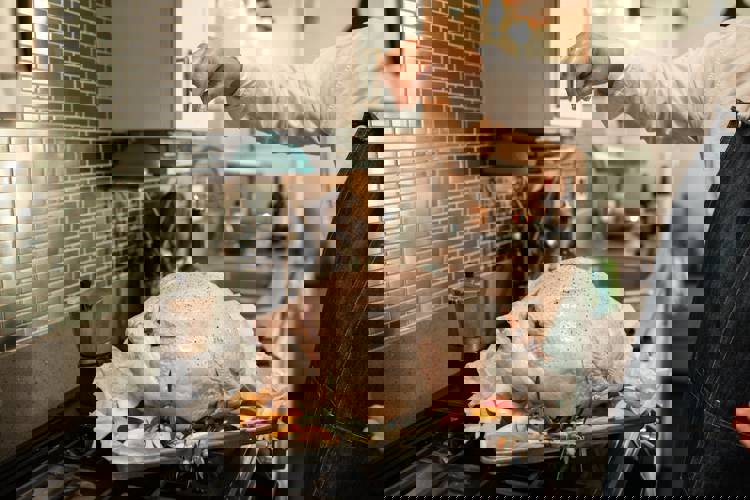
Place turkey breast-side up on rack. Tent loosely with foil if browning too quickly. Do not baste frequently as this lowers oven temperature. Use a meat thermometer inserted into thickest part of thigh without touching bone.
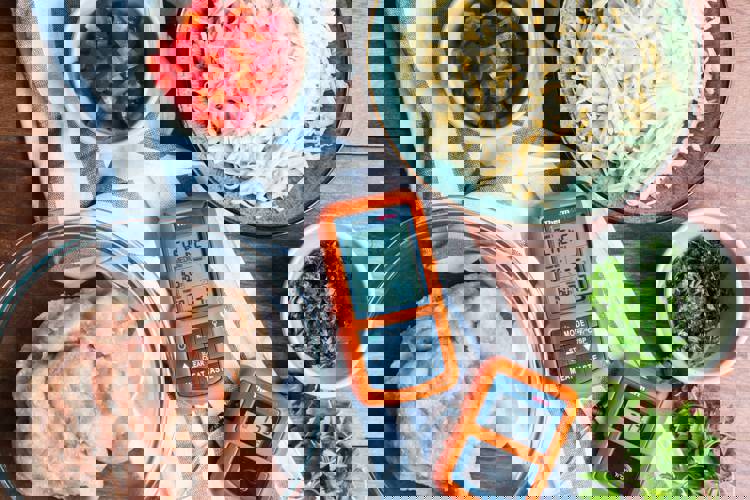
Cook until meat thermometer reads 165°F in thigh, breast, and center of stuffing (if stuffed). Approximate times: 12-14 lbs (3-3.75 hours), 15-18 lbs (3.75-4.25 hours), 18-20 lbs (4.25-4.5 hours), 20-24 lbs (4.5-5 hours).
Juices should run clear and drumstick should move easily when turkey is done
Remove turkey from oven when internal temperature reaches 165°F. Tent loosely with foil and let rest 20-30 minutes. This allows juices to redistribute throughout the meat, ensuring every slice is moist and flavorful.
Turkey temperature will rise 5-10°F during resting - factor this into timing
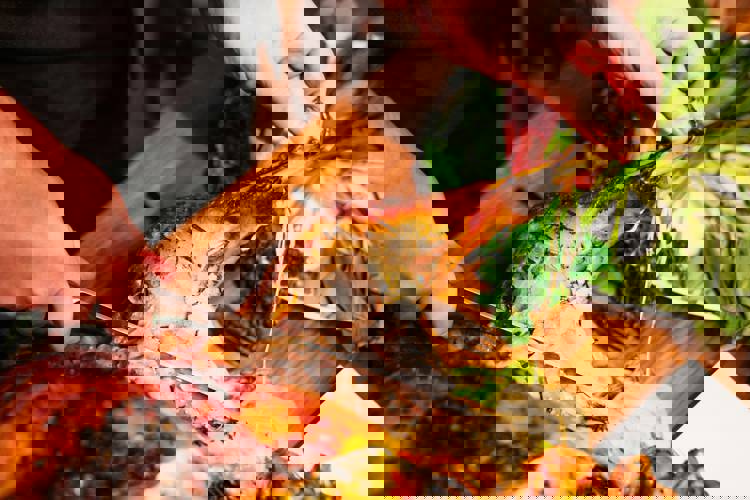
Start by removing legs and thighs at the joint. Slice thigh meat parallel to the bone. For breast meat, make a horizontal cut near the wing, then slice downward in even slices. Use a sharp carving knife and cut against the grain for tender slices.
Serve turkey immediately or keep warm in 200°F oven for up to 2 hours. Refrigerate leftovers within 2 hours of cooking. Properly stored leftover turkey keeps 3-4 days in refrigerator or 3 months in freezer.
Don't wait until the last minute to order fresh turkey - most stores require 2-3 week advance orders. Don't pick up fresh turkey more than 2 days ahead. Don't buy frozen turkey without allowing proper thawing time (24 hours per 4-5 pounds). Always have a backup plan.
Set calendar reminders: order fresh turkey 3 weeks ahead, start thawing frozen 4-5 days ahead
Don't forget to check both cavities for giblet bags before cooking. Don't rinse raw turkey (spreads bacteria). Don't try to bring turkey to room temperature before cooking (unsafe). Don't brine pre-brined turkeys. Don't leave stuffing in turkey overnight.
When in doubt, cook turkey cold from the fridge - it's safer than room temperature
Don't open the oven door frequently to baste (reduces temperature and extends cooking time). Don't cook below 325°F (food safety issue). Don't rely only on pop-up indicators - use a meat thermometer. Don't skip the resting period after cooking.
165°F internal temperature is non-negotiable for food safety
If turkey is browning too fast, cover with foil. If cooking takes longer than expected, don't increase temperature - be patient. If you forgot to thaw completely, use cold water method to finish thawing. If plastic bag melted inside, consult food safety guidelines.
Turkey is forgiving - most 'disasters' can be fixed with patience and proper technique