


A Guide to Milk: What Whole, 2%, Skim, Lactose-Free, A2 and Ultra-Filtered Actually Mean


Bestsellers for Milk
The main difference between the milk types at Safeway is the fat content, and therefore the calories, with almost everything else staying the same. A cup of any of them has about 8 grams of protein and about 300 milligrams of calcium, which is roughly a quarter of what an adult needs in a day. High-protein varieties like Fairlife are the exception, at around 13 grams of protein a cup.
Skimming removes fat along with the fat-soluble vitamins, but those vitamins get added back before the milk is bottled, and protein and calcium are not affected at all.
So choosing between whole, 2%, 1% and skim comes down to fat, calories, taste, and not really nutrition. But labels like lactose-free, A2 and ultra-filtered do make a difference beyond taste.
How the Fat Percentages Work
2% is a set standard across the industry, so 2% milk from one dairy has the same fat as 2% from another and the brand makes no difference.
Per cup | Milkfat | Calories | Saturated fat |
|---|---|---|---|
Whole | ~3.25% | ~150 | 4.5-5 g |
2% reduced-fat | 2% | ~122 | 3 g |
1% low-fat | 1% | ~102 | 1.5 g |
Skim | under 0.5% | ~85 | almost none |
The percentage is fat as a share of the milk's weight, not as a share of its calories, which is why the number looks so small. And since milk is mostly water, once you account for that, 2% milk gets about 35% of its calories from fat, and whole milk gets close to 50%.
Nearly all fluid milk sold in the US has vitamin D added, about 100 IU a cup. Reduced-fat, low-fat and skim milk also get vitamin A added, because vitamin A leaves with the fat when the milk is skimmed. Whole milk keeps enough of its own, so none of the skimmed versions end up short on fat-soluble vitamins. "Vitamin D milk" on a label is just the old name for whole milk, and does not mean it has extra vitamins.
How Fat Level Changes Coffee and Cooking
Fat matters most in coffee, especially if you are pouring milk in to take the edge off the bitterness, since the fat coats the tongue and softens the acidity. Whole milk also steams into the creamiest, glossiest foam and is the easiest to work with, because the fat gives the foam body. Skim actually makes more foam, since foam is built by protein rather than fat, but it comes out dry and stiff instead of creamy. 2% sits in between.
Cooking rewards the fat too, mainly in dishes where the milk is meant to add richness. Cream sauces, custards and mac and cheese all turn out silkier with whole milk. The fat also buffers the proteins, so whole milk is less likely to curdle in acidic or high-heat dishes. Where milk is only there for liquid volume, like pancakes and most baking, skim works fine.
On calories, skim has the fewest per cup, so switching to it does trim them. But the fat in whole milk is more filling, and drinking whole milk has not been clearly linked to weight gain. Pick whichever one leaves you satisfied without going back for a second glass.
What Changed for Children's Milk in 2026
Milk for kids is the one place where the fat level comes with an official recommendation attached, and it is also the part of this that changed most recently. From age 1 to 2 the advice has not moved, and pediatricians and the dietary guidelines both recommend whole milk, about 2 to 3 cups a day, because toddlers need the calories and the fat matters for development in the first two years. Before the first birthday, cow's milk of any kind is not recommended as a main drink.
What changed is the advice after age 2. For decades both the AAP and the dietary guidelines told parents to step children down to 1% or skim at that point, to hold down saturated fat. The 2025-2030 dietary guidelines, released on 7 January 2026, reversed the federal half of that and now recommend full-fat dairy with no added sugars, on the grounds that it helps children meet their energy needs and supports brain development.
The policy caught up quickly. The Whole Milk for Healthy Kids Act was signed on 14 January 2026 and lets schools serve whole and 2% milk again rather than only low-fat and fat-free, and it exempts milk fat from the saturated fat limits in school meals. The USDA followed with a rule that took effect on 8 June 2026, so childcare and other child nutrition programs can now serve whole, 2%, 1% or skim milk to children aged two and over.
The AAP has not moved with it. Its beverage guidance still says children should switch to skim or low-fat milk at age 2, which means parents are now getting different advice from their pediatrician than from federal policy. The research behind the change is real but not conclusive, since studies have repeatedly found that children drinking whole milk tend to have lower body fat, which is the opposite of what the old advice predicted. The evidence that low-fat milk improves anything in young children was always thin as well.
How the Saturated Fat Advice Changed
For most of the past half century there was an official answer about which fat level to drink, and in January 2026 it changed. Protein and calcium do not vary, so the difference is calories and fat. Skim has the fewest calories, and whole has the most fat and keeps you fullest.
For about forty years, federal guidelines told everyone over age 2 to pick low-fat or fat-free dairy. The reasoning was that saturated fat raises LDL cholesterol, high LDL is linked to heart disease, and whole milk has more saturated fat than the alternatives. A cup of whole milk has 4.5 to 5 grams of it, about a quarter of the 20-gram daily limit on a 2,000-calorie diet, while skim has almost none.
Research over the past decade has muddied that. A 2018 study followed about 136,000 adults in 21 countries for around nine years. It found that people who ate more dairy died less often and had less heart disease, and the pattern held for full-fat dairy as well as low-fat. A 2021 study measured blood markers of dairy-fat intake instead of asking people what they ate, and linked higher dairy fat to about 12 to 14% lower heart-disease risk. A 2024 analysis tied total dairy intake to small drops in heart disease, around 4%, and stroke, around 6%. All of this is observational work, so it shows associations rather than cause, and none of it separates milk cleanly from cheese and yogurt. The findings are strongest for cheese and yogurt, while for whole milk on its own the evidence is the most mixed of any dairy food.
The federal dietary guidelines changed in January 2026. For the first time they say dairy at any fat level, from skim to whole, can fit a healthy eating pattern. They still recommend about three servings a day and still cap saturated fat at under 10% of daily calories. So whole milk is no longer discouraged, but its saturated fat still counts toward that limit.
The settled part is that whole milk has more saturated fat and more calories than skim, while the protein and calcium are the same. What is not settled is whether whole milk is better or worse than low-fat for long-term heart health. The evidence is observational and mixed, which is why the guidance now covers the whole range.
What Lactose-Free Milk Is
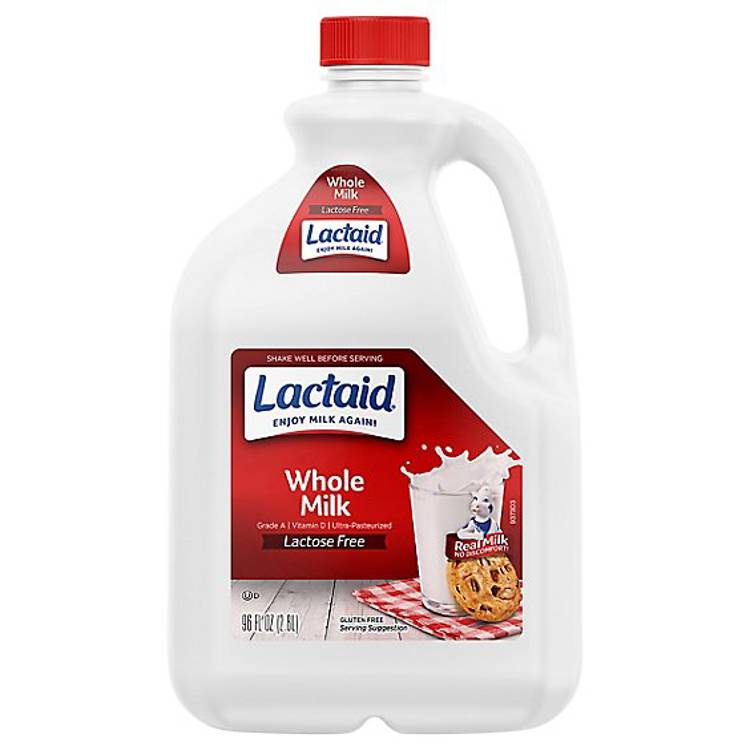
Lactose-free milk is ordinary cow's milk with the enzyme lactase added to it. Lactase breaks lactose, the natural sugar in milk, into glucose and galactose. Those are two simpler sugars the body can absorb without any lactase of its own. Nothing else changes, so you get the same protein, the same calcium, the same fat for whatever tier you buy, and about the same calories.
It does taste sweeter, but no sugar has been added. Glucose and galactose just taste sweeter on the tongue than whole lactose does, so the milk's own sugar tastes sweeter once it is split.
The product is for people with lactose intolerance, who do not make enough lactase, so the undigested lactose ferments in the gut and causes gas, bloating and diarrhea. How common this is depends a lot on ancestry. Measured lactose malabsorption runs about 15% among adults of Northern European descent and up to about 85% among Black American adults, with high rates also among Asian, Hispanic and Native American populations. Lactose intolerance is not the same as a milk allergy. An allergy is a reaction to milk protein, and lactose-free milk still has all of that protein in it, so it is not safe for anyone with a milk allergy. One Safeway shopper, under the headline "Easy on the Digestive Tract," wrote that Lactaid "never fails to comfort my childhood nostalgia for real milk. This does the trick when you can't have Lactose!" If you digest lactose fine, there is no benefit in it for you.
What A2 Milk Is
A2 milk comes from cows bred to make only one form of a milk protein. Most cows produce milk with two forms of beta-casein, A1 and A2, which differ by a single amino acid. A2 milk has only the second one, and in every other way it is normal milk.
The idea behind it is that A1 protein, when digested, can release a compound called BCM-7, and that BCM-7 causes the stomach discomfort some people get from milk. Take out the A1 and there is no BCM-7, and that part of the chemistry is not in dispute. What is disputed is whether it causes symptoms people actually notice.
The studies disagree, with several small trials reporting less bloating and stomach discomfort on A2 milk than on regular milk, and a 2025 review of human studies finding the results fairly consistent. A 2022 review found the opposite, calling the evidence conflicting and thin, especially in children. Much of the research is small, short, funded by industry and based on symptoms people report themselves. A2 milk may help some people who get stomach trouble from milk, but the case for it is far from settled.
A2 milk is not lactose-free. It has the same lactose as any other milk, because A2 refers to the protein and not the sugar. Anyone who is truly lactose intolerant needs lactose-free milk instead. Some people who assume they are lactose intolerant may actually be reacting to A1 protein and would do fine on A2, but that is a maybe, and the two products solve different problems.
What Ultra-Filtered and High-Protein Milk Is
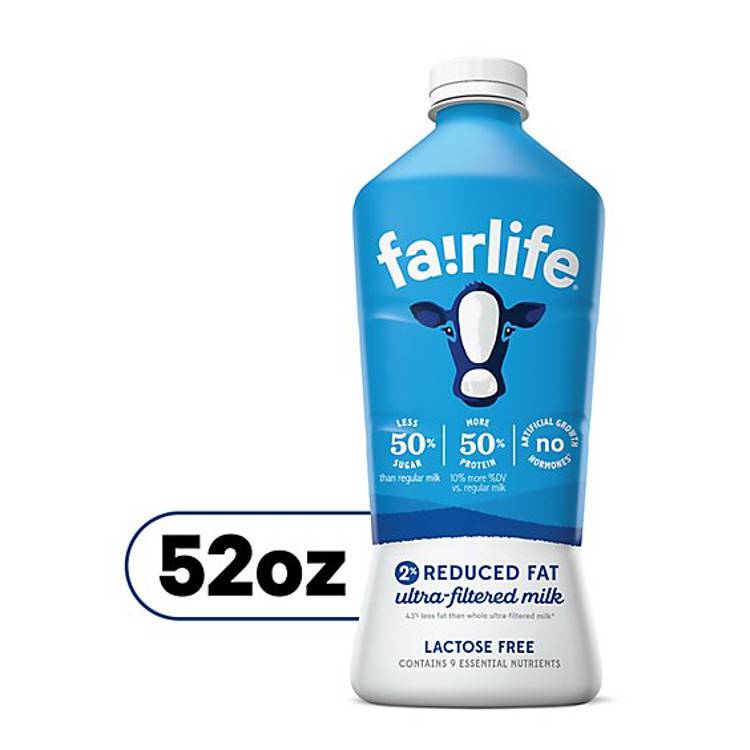
Ultra-filtered milk, sold under brands like Fairlife, is real milk pushed through fine filters. The filters concentrate its protein and calcium while removing water and some sugar, including most of the lactose. Lactase is added on top of that, so the finished product is lactose-free. Nothing in it is synthetic, and the extra protein comes from the milk itself, concentrated by the filtering.
The pitch for the category is about 50% more protein and about 50% less sugar than regular milk. Fairlife's 2% carton at Safeway lists 13 grams of protein a cup against the usual 8, plus 6 grams of sugar and 120 calories. The numbers change by fat level, so read the carton. One Safeway reviewer, under the headline "Great taste," wrote that it is "unlike other lactose free milks that are super sweet or watery. This one is a winner because it tastes like milk should taste."
Most people who already get enough protein do not need it, since what is in the carton is just concentrated milk. It is worth the price for someone who wants more protein per glass, or less sugar, or needs lactose-free milk. It is especially worth it for someone who wants all three at once, like athletes, older adults trying to hold on to muscle, and anyone who finds a glass of milk an easy way to get protein in.
What Organic, Grass-Fed and "Hormone-Free" Mean
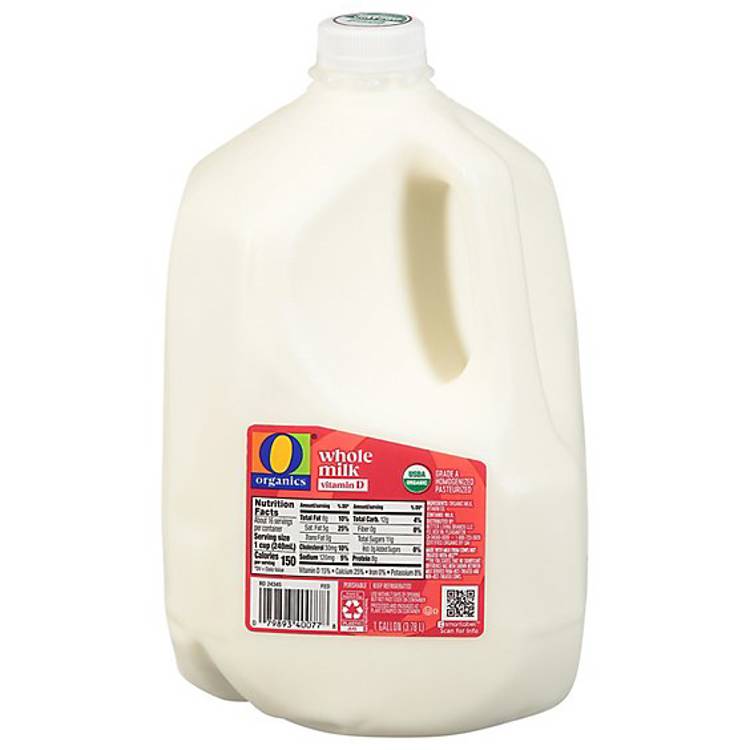
Organic, grass-fed and conventional milk all have the same protein, calcium and main vitamins. The one difference that shows up consistently is the fat. Cows that eat more grass produce milk with a better omega-3 balance, and a 2013 analysis found about 62% more omega-3 in organic milk than in conventional. The amounts are small either way, and milk is not a meaningful source of omega-3 whichever kind you buy.
Some of the labels on this shelf advertise a standard that already applies to all milk. Every milk sold is tested for antibiotic residue and has to be free of it, so "antibiotic-free" describes the whole case. All milk also contains naturally occurring hormones, so "hormone-free" milk is not possible. In practice the claim means no added synthetic growth hormone (rBST), which the FDA and NIH have found does not change the milk's safety or nutrition. Organic is a certification covering how the cows are fed and raised, while grass-fed is a separate claim, so the two do not always go together.
How to Read the Case at Safeway
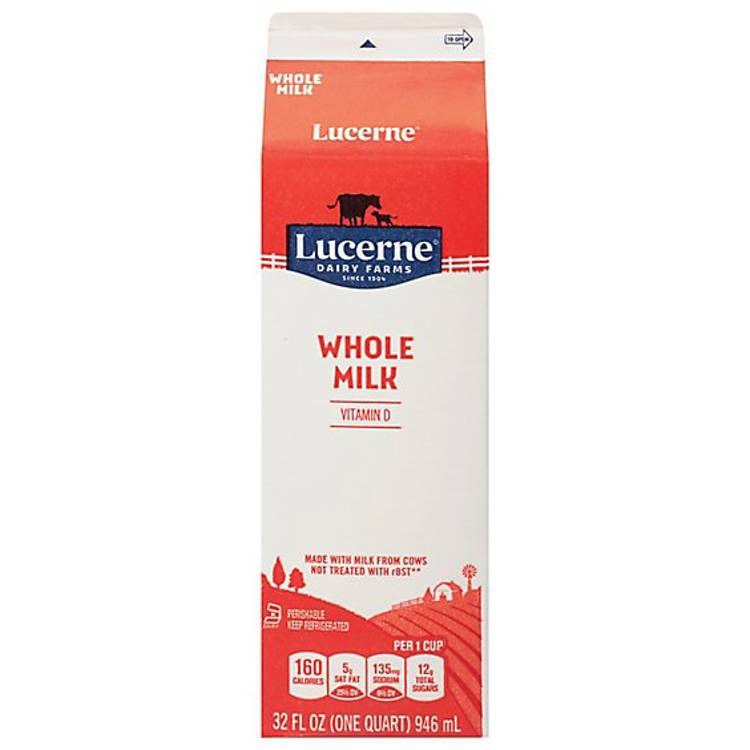
Safeway's Lucerne store brand covers the standard fat tiers and a full lactose-free line. The case also carries national brands like Lactaid and Fairlife, plus the O Organics organic line. A longtime Lucerne buyer summed the store brand up under the headline "It's milk.": "It's milk. Good, old fashioned milk. Yum."
Reading the case is simpler than the labels make it look. The fat tier, whole through skim, is a taste and calorie choice, since protein and calcium do not change across it. Lactose-free means the sugar has been split in advance, for people who cannot split it themselves. A2 means one protein form has been left out, for people who find regular milk hard on the stomach. Ultra-filtered or high-protein means concentrated milk with more protein and less sugar. Organic and grass-fed describe how the cows were raised, and say little about what ends up in the glass.
One note on dates is that the long shelf life on much of the organic and lactose-free stock comes from ultra-pasteurization, not from preservatives.
Common Questions
How do the fat levels differ nutritionally?
Less than most people expect. Protein and calcium are the same across the tiers, so the difference is calories and fat, with skim lowest and whole highest and most filling. Since January 2026 the federal guidelines have allowed milk at any fat level in a healthy diet, so the choice comes down to your calorie budget, what you are using it for and what you like. The saturated fat in whole milk still counts toward your daily cap.
What's the difference between 2% and whole milk?
Fat and calories. Whole milk is about 3.25% fat, which works out to roughly 8 grams of fat and 150 calories a cup. 2% has about 5 grams of fat and 122 calories. Both give you 8 grams of protein and 300 milligrams of calcium. Whole tastes creamier and 2% tastes lighter.
How does lactose-free milk differ from regular milk?
Only in the sugar, which has been pre-split by an added enzyme, so the nutrition is basically identical. It is made for people who cannot digest lactose, and there is no particular benefit in it for anyone else.
What is A2 milk, and is it lactose-free?
A2 milk comes from cows that make only the A2 form of a milk protein, which some people find easier on the stomach. It is not lactose-free, and has as much lactose as any other milk. A2 is about the protein and lactose-free milk is about the sugar, so they solve different problems.
Which milk has the most protein?
All plain milk has about 8 grams a cup, at every fat level. Ultra-filtered high-protein milk, the Fairlife-style cartons, is filtered to concentrate its own protein up to around 13 grams a cup. It is also lower in sugar and lactose-free.
What milk should a toddler drink?
Whole milk from age 1 to 2, about 2 to 3 cups a day, because the fat supports brain development at that age. Cow's milk should not be a main drink before the first birthday. After age 2 the two main sources now disagree, since the AAP still says to switch to low-fat or skim while the 2026 dietary guidelines recommend full-fat dairy for children. Federal policy has followed the guidelines, and schools and childcare programs have been able to serve whole milk to children aged two and up since June 2026.
Safeway Buying Guide
Lucerne Milk Reduced Fat 2% Milkfat 1 Gallon - 128 Fl. Oz.



This Lucerne Milk Reduced Fat 2% Milkfat 1 Gallon is a great choice for those looking for a healthier milk option. It has 37% less fat than regular milk, and provides 8g of protein per serving. It also includes added Vitamin A and D, and is sourced from cows not treated with rBST. The product is also Kosher certified and conveniently packaged in recyclable containers.
- Reduced Fat - Many customers appreciate the 2% milkfat content, which allows them to enjoy dairy while maintaining a healthier diet.
- Large Quantity - The generous 1-gallon size is appreciated by customers, as it ensures they have plenty of milk on hand for their various needs.
- Great Taste - Despite being reduced fat, customers love the taste of Lucerne Milk, noting it doesn't compromise on flavor.
- Versatile Use - Reviewers commend its versatility, using it in coffee, cereal, recipes or just drinking it straight.
- High Quality - Customers often mention the high quality of Lucerne Milk and its consistent freshness.
- Good for Digestion - Some reviewers have noted that this milk is easier on their stomach compared to full-fat alternatives.
- Affordability - Many customers highlight the good value for money provided by this product given its quality and quantity.
Lucerne Milk Whole 1 Gallon - 128 Fl. Oz.


Lucerne Milk Whole 1 Gallon is a nutritious dairy product made from milk from cows not treated with rBST. It contains 9g of total fat, 5g of saturated fat, 135mg of sodium, 13g of total carbohydrates and 9g of protein per cup. It is Grade A and certified Kosher. This product also has 25% calcium and 0% iron.
- Rich and creamy texture that is loved by customers
- Long shelf life makes it a convenient choice for many households
- Excellent source of calcium and other essential nutrients
- Customers appreciate its great taste, which is often described as fresh and natural
- The 1-gallon size offers good value for the money and is perfect for large families or frequent users
- It's versatile, suitable for everything from coffee to cooking to drinking straight from the glass
- The product is praised for its consistent quality across different purchases
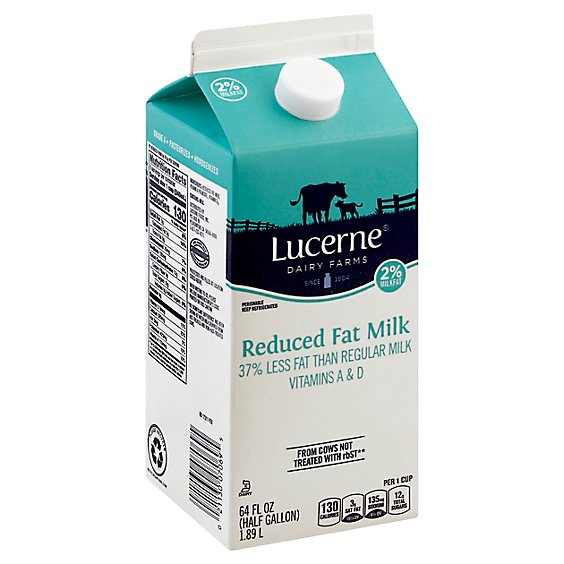
Lucerne Milk Reduced Fat 2% Milkfat - 64 Fl. Oz. (package may vary)


This Lucerne Milk Reduced Fat 2% Milkfat is a great choice for those looking for a wholesome milk product. It provides 37% less fat than regular milk and has vitamins A & D added to it. The milk is Grade A, pasteurized, homogenized and sourced from cows not treated with rbST. Each serving contains 130 calories and 5g of total fat. It also comes with a 100% money back guarantee from the Lucerne family, so you can trust that it is of high quality and satisfaction guaranteed.
- Great Taste: Customers have reported that this milk has a delicious taste, even though it is reduced fat.
- Healthy Choice: With only 2% milkfat, this product is a healthier option for those looking to reduce their fat intake.
- Versatility: Lucerne Milk is versatile and can be used in various dishes, baking, or consumed directly.
- Good Shelf Life: Reviews indicate that the product has a good shelf life, which reduces waste.
- Creamy Texture: Despite being lower in fat, users appreciate its creamy texture.
- Easily Digestible: Some customers have noted that Lucerne Milk is easy on the stomach and digestible.
- Affordable: Customers appreciate the affordability of this product.


