


Kombucha for Gut Health: What the Research Says and How Much to Drink


Bestsellers for Kombucha
Most people buy kombucha for one reason: gut health. The fizzy, slightly tart fermented tea has become a grocery-aisle staple because of its probiotics, live bacteria and yeast that improve your digestion. It also happens to taste good. At 5 to 8 grams of sugar per serving for most brands, it has a fraction of what's in a typical soft drink (about 40 grams of sugar per 12-ounce can) or juice (about 33 grams per cup), while still delivering sweetness, carbonation, and flavor variety.
Research confirms kombucha does something measurable beyond taste. A 2024 controlled study in Scientific Reports found that four weeks of daily kombucha shifted gut bacteria toward beneficial species, including SCFA-producing taxa like Bifidobacterium and Prevotella. A separate 2023 trial gave kombucha to women with constipation-predominant IBS and saw stool frequency increase by 42% within ten days.
If you're here because you want something that tastes good, is low in sugar, and actually does something for your gut, you're in the right place.
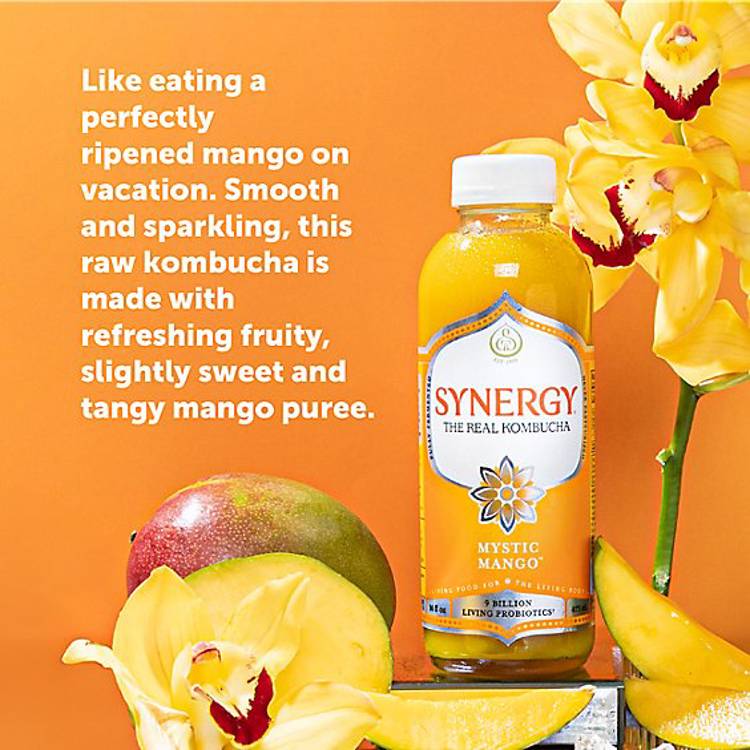
How kombucha works
Kombucha is sweetened tea fermented by a SCOBY, a symbiotic culture of bacteria and yeast. During fermentation, yeast converts sugar into ethanol and carbon dioxide. Bacteria then convert the ethanol into organic acids: acetic acid, lactic acid, and gluconic acid. The process takes one to four weeks depending on the producer.
The result is a fizzy, tangy drink containing live microorganisms, organic acids, and small amounts of B vitamins and caffeine.
Here's what matters for your gut: kombucha introduces microbial diversity. Its dominant organisms (acetic acid bacteria like Komagataeibacter and yeast like Brettanomyces and Saccharomyces) are different from the Lactobacillus strains in yogurt or supplements. A 2022 study in Nutrients used metagenomic sequencing on nine commercial kombucha products and identified over a dozen distinct bacterial and yeast species per bottle. Diversity, not just volume, is what researchers link to better digestive outcomes.
The organic acids matter too. Acetic acid has antimicrobial properties. Glucuronic acid supports detoxification through glucuronidation, converting toxins into water-soluble compounds your body can excrete. A 2014 comprehensive review in Food Science and Food Safety measured acetic acid concentrations up to 9.5 g/L in fermented kombucha.
Do the live organisms actually survive your stomach acid? Lab studies say yes. A 2024 study in Frontiers in Microbiology tested Brettanomyces yeast strains from kombucha in simulated gastric juice and found 99 to 100% survival after three hours at pH 2. Acetic acid bacteria from kombucha also grew under low pH in the presence of bile salts. These are in vitro results. No one has directly measured what percentage of a bottle's organisms reach your colon alive. But they're encouraging.
How much to drink
Start small. If you've never had kombucha, your gut needs to adjust.
If you're new: 4 ounces a day for the first week. See how you respond before increasing.
For daily maintenance: 8 ounces per day. This is the amount most clinical trials have used (the Georgetown diabetes study used 240 mL, roughly 8 ounces) and it balances probiotic intake with sugar and acidity.
Upper limit: 12 ounces per day for most people. Going beyond this raises your risk of digestive discomfort, excess sugar, and excessive acid exposure on your teeth.
Note on the widely cited "CDC recommendation" of 4 ounces, 1 to 3 times daily: this comes from a 1995 CDC MMWR case report about two people in Iowa who became severely ill after drinking kombucha daily for two months. The CDC stated that approximately 4 ounces "may not cause adverse effects in healthy persons." That's a safety observation from a case report, not a formal dosing guideline. It's been repackaged across the internet as a "recommendation," but the CDC has no dedicated kombucha dosing page.
Most bottles at the store (GT's Synergy, Health-Ade) are 16 ounces. That's two servings by any reasonable standard. Pour half, save the rest.

When to drink it
With a meal: A 2023 randomized crossover trial at the University of Sydney tested what happened when 11 healthy adults drank kombucha alongside a high-glycemic meal. The meal's glycemic index dropped from 86 (high) to 68 (medium), a 21% reduction. The insulin index dropped 18%. Soda water and diet lemonade consumed with the same meal had no effect. If you eat high-carb meals, drinking kombucha alongside them is the most evidence-backed timing.
Morning, between meals, or as a soda replacement: All fine. The caffeine is minimal, around 8 to 15 mg per 8-ounce serving for most brands, roughly a tenth of a cup of coffee. Some people drink it as an afternoon pick-me-up.
Before bed: The caffeine is small but can affect light sleepers. Carbonation can also cause bloating if you lie down soon after.
Consistency matters more than timing. The gut microbiota changes seen in clinical trials required daily intake over weeks.

What's in a serving
A standard 8-ounce serving of kombucha contains:
- Calories: 25 to 50 (varies by brand and flavor)
Sugar: 5 to 10 grams typical; ranges from 0 grams (Humm Zero Sugar) to 19 grams (Health-Ade Pink Lady Apple, 16 oz)
Caffeine: 8 to 15 mg (GT's reports 8 to 14 mg; Health-Ade reports 8 to 15 mg per serving)
Alcohol: Legally under 0.5% ABV, but actual measurements tell a different story
pH: 2.5 to 3.5 (highly acidic, similar to lemon juice)
On alcohol: a 2020 study by the BC Centre for Disease Control tested 684 kombucha samples using gas chromatography. The mean ethanol content was 0.77% ABV. The median was 0.62%. And 31.5% of samples exceeded the 1% ABV regulatory limit for non-alcoholic beverages. Four samples tested above 3% ABV. The legal limit for U.S. non-alcoholic classification is 0.5% ABV, but enforcement relies on spot testing, and fermentation continues in the bottle. If you're avoiding alcohol entirely, be aware that the label and the reality don't always match.
What the research actually shows
Here's a summary of the major human clinical trials on kombucha. All of them are small. The science is real but early.
Blood sugar (Mendelson et al., 2023, Georgetown University) 12 people with Type 2 diabetes drank 240 mL of kombucha daily for four weeks in a randomized crossover trial. Fasting blood glucose dropped from 164 mg/dL to 116 mg/dL, a 29% reduction (p = 0.035). The placebo group saw no significant change. Published in Frontiers in Nutrition. Limitation: very small sample.
Digestive health (Isakov et al., 2023, Federal Research Centre of Nutrition, Moscow) 40 women with constipation-predominant IBS drank 220 mL of kombucha enriched with inulin and B vitamins daily for 10 days. Stool frequency rose from 0.60 to 0.85 times per day (p = 0.004). Bristol Stool Scale score improved from 3.0 to 4.4 (p = 0.001). Published in Current Developments in Nutrition. Limitation: the drink contained added inulin and vitamins, so effects can't be attributed to kombucha alone.
Gut microbiota (Ecklu-Mensah et al., 2024, Scientific Reports) 24 healthy adults, 4-week intervention. Kombucha drinkers showed enrichment of SCFA-producing bacteria including Prevotella, Bifidobacterium, and Eubacterium. The kombucha-associated probiotic Weizmannia coagulans dominated gut microbiome composition within four weeks. No changes in blood biomarkers or inflammation markers. Limitation: small sample, short duration.
Glycemic index (Atkinson et al., 2023, University of Sydney) 11 healthy adults in a crossover trial. Drinking unpasteurized kombucha with a high-GI meal dropped the meal's glycemic index from 86 to 68 (p = 0.041) and insulin index from 85 to 70. The meal went from "high GI" to "medium GI." Soda water and diet soft drink had no effect. Published in Frontiers in Nutrition.
Triglycerides (Arce-Lopez et al., 2025, IMDEA Food, Madrid) 58 healthy adults drank 250 mL of fiber-enriched kombucha daily for six weeks. Triglycerides dropped from 69.6 to 62.8 mg/dL (p = 0.031 between groups). Bifidobacterium increased. Ruminococcus torques (linked to inflammatory bowel disease) decreased. Limitation: fiber enrichment complicates attribution.
Weight loss (Cardoso et al., 2024, Nutrients) 59 people on a calorie-restricted diet drank 200 mL of green tea kombucha daily for 10 weeks. Kombucha did not enhance weight loss beyond caloric restriction alone. It did improve inflammatory markers and a cardiovascular risk index (LAP). Kombucha is not a weight-loss drink.
Systematic review (Fraiz et al., 2025, MDPI Fermentation) Reviewed all 8 published kombucha clinical trials. Conclusion: kombucha "may provide health benefits, particularly in alleviating gastrointestinal symptoms," with "modest capacity for modulating gut microbiota." The review noted the small sample sizes and short durations across all studies.
The pattern: kombucha appears to shift gut bacteria, improve stool quality, and reduce blood sugar spikes when consumed with meals. It does not produce dramatic effects on blood markers, inflammation, or weight. The research is promising but limited. No study has included more than 60 people, and none has lasted longer than 10 weeks.
Side effects to watch for
Kombucha is acidic and fermented. Too much, too fast, and you'll notice.
Gas and bloating: The most common complaint, especially in the first week. New bacteria meet your existing gut flora and produce gas while they settle in. Starting with 4 ounces and increasing gradually helps.
Nausea: Usually from drinking it on an empty stomach. The pH is between 2.5 and 3.5, comparable to lemon juice. That's hard on an empty stomach lining. Eat something first.
Digestive upset: Cramping or loose stools from too much too quickly. Scale back and give your system a few days.
Tooth enamel: This deserves more attention than it gets. Kombucha's pH (2.5 to 3.5) is low enough to erode enamel. Sipping it slowly throughout the day is worse than drinking it in one sitting. Rinse your mouth with water afterward. Don't brush immediately. The softened enamel needs time to remineralize.
Headaches: Some people report headaches in the first few days. Histamine and tyramine produced during fermentation are the likely cause. It usually passes.
These are typically mild and temporary. If they persist, stop drinking it.
Who should be careful
Pregnant or breastfeeding women: Most doctors advise against kombucha during pregnancy. It's unpasteurized, contains trace alcohol (the BCCDC study found a mean of 0.77% ABV across 684 samples, with some exceeding 3%). The caffeine adds another consideration.
People with compromised immune systems: Kombucha is raw and unpasteurized. The diverse microbiology that makes it beneficial for healthy people makes it risky for immunocompromised individuals, including those undergoing chemotherapy, organ transplant recipients, or people with HIV/AIDS.
People with IBS: The 2023 Isakov study showed benefit for constipation-predominant IBS, but fermentation byproducts can worsen symptoms in other IBS subtypes. Start with 2 ounces and monitor.
Diabetics: The Georgetown study showed fasting glucose improvement, but sugar content varies wildly by brand (0 to 19 grams per serving). Choose low-sugar options and monitor blood glucose. The Atkinson et al. study suggests drinking kombucha with meals may actually help blunt blood sugar spikes.
Children under 4: Not recommended due to unpasteurized content and trace alcohol.
How to read the label
"Raw" or "unpasteurized" means the probiotics are alive. Pasteurized kombucha has been heat-treated, killing most beneficial organisms. If you're drinking kombucha for gut health, unpasteurized is the point.
Sugar: Check the Nutrition Facts panel. "Low sugar" on the front label doesn't mean much. Look at the actual grams per serving. Under 6 grams per 8-ounce serving is good. Watch for differing serving sizes. A "16 oz bottle" with nutrition facts per "8 oz serving" has double what you think.
Probiotic count (CFUs or organisms): Not all brands list this. When they do, note whether the count is per serving or per bottle. GT's lists per bottle (9 billion), so the per-serving number is roughly half.
Ingredients: Tea, sugar, culture. Fruit juice for flavoring is fine. If you see added sweeteners, artificial flavors, or preservatives, that's a processed product using kombucha as marketing.
Types of kombucha
Traditional kombucha is the standard: fermented tea with live cultures. GT's Synergy, Health-Ade, and Humm all fall here. Fizzy, tangy, and unpasteurized.
Probiotic seltzer is lighter. Less acid, less funk, more like sparkling water with added cultures. Humm makes one. Good for people who want probiotics but don't like the taste of traditional kombucha. Lower organic acid content than real kombucha.
Functional kombucha adds ingredients like collagen, adaptogens, or extra vitamins. The Aura products in the store are an example, combining kombucha with collagen protein. Judge these on their base kombucha quality first.
Storing kombucha
Keep it refrigerated. The live cultures keep fermenting at room temperature, which increases alcohol content, carbonation pressure, and acidity. Leave a bottle out too long and it gets undrinkably sour, or bursts when you open it.
Once opened, finish within 3 to 5 days. Carbonation fades fast, and air exposure degrades the probiotics. Seal the cap tightly between pours.
Unopened and refrigerated, kombucha lasts until its best-by date, usually several months. If a bottle looks excessively bubbly, is bulging, or smells off, toss it.
The 48-ounce multi-serve bottles (GT's Synergy, around $11) make sense if you drink kombucha daily. At 8 ounces a day, you'll finish it in six days, within the freshness window. If you only drink a few ounces occasionally, 16-ounce bottles stay fresher since you finish them faster.
FAQ
Does kombucha actually have enough probiotics to matter?
It depends on the brand. GT's Synergy delivers 9 billion organisms per bottle, comparable to a standard probiotic supplement. Health-Ade delivers about 1 billion, barely at the threshold researchers consider meaningful. But kombucha's value isn't just the count. The 2024 Ecklu-Mensah study showed measurable gut microbiota changes after four weeks of daily consumption, including colonization by Weizmannia coagulans, a probiotic bacterium that was present in the kombucha itself.
Is kombucha better than taking a probiotic supplement?
Different tools. Supplements deliver higher doses of specific strains (10 to 50 billion CFUs per capsule). Kombucha delivers fewer organisms but includes organic acids and enzymes from fermentation. No head-to-head clinical trial has compared the two directly. Some people use both.
Can I drink kombucha every day?
Yes. All of the clinical trials showing benefits used daily consumption for at least 10 days. 8 ounces per day is a reasonable target. Watch your total sugar intake. At 6 to 10 grams per serving, it adds up.
Why does kombucha have sugar if it's healthy?
Sugar feeds the SCOBY during fermentation. Bacteria and yeast consume most of it, converting it into acids and CO2. What remains varies by brand and fermentation length. Longer fermentation means less sugar but a more sour taste. Brands control the balance. Always check the label.
Does kombucha contain alcohol?
Yes. All kombucha contains alcohol from fermentation. The U.S. legal limit for "non-alcoholic" is 0.5% ABV, but a large-scale 2020 study by the BC Centre for Disease Control found the average was 0.77% ABV across 684 samples, and 31.5% exceeded 1% ABV. If you avoid alcohol entirely, be aware.
Can kombucha help with weight loss?
No. A 2024 trial (Cardoso et al., Nutrients) put 59 people on calorie-restricted diets with or without daily kombucha for 10 weeks. Kombucha did not increase weight loss. It improved inflammatory markers, but that's not weight loss. If you're replacing high-calorie sodas with low-sugar kombucha, the calorie reduction helps. The kombucha itself doesn't burn fat.
Is homemade kombucha better than store-bought?
You get control over ingredients and fermentation time. But homemade carries more risk: inconsistent alcohol levels (potentially exceeding 3% ABV), contamination, and no quality testing. If you're experienced with fermentation and follow food safety protocols, homemade can be excellent. If you're not, commercial brands are safer.
Why does kombucha taste like vinegar?
Acetic acid. Same compound that makes vinegar vinegar. Longer fermentation produces more of it. Lab measurements show concentrations up to 9.5 g/L. If your kombucha is aggressively sour, it was either over-fermented or stored too warm. Most commercial brands balance acidity with residual sweetness and fruit flavoring.
Can kombucha replace soda?
For a lot of people, yes, and it's one of the best swaps you can make. A typical 12-ounce soft drink has about 40 grams of sugar. A 12-ounce Humm kombucha has 7 to 8 grams. GT's Synergy runs about 6 grams per 8-ounce serving. You get carbonation, sweetness, and flavor variety at a fraction of the sugar. The taste is tangier than soda, more like a fizzy iced tea with a sour kick, but most people who try a few flavors find something they like. And the 2023 Sydney study found that kombucha consumed with a meal actually reduced the meal's glycemic index by 21%. Soda does the opposite.
Safeway Buying Guide
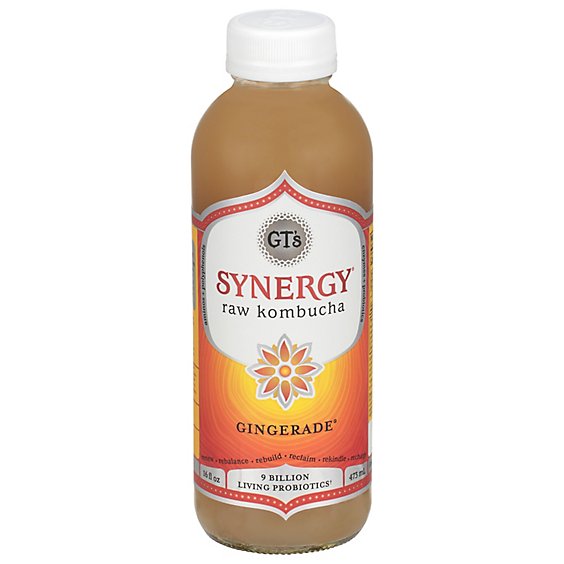
GT’s Synergy Gingerade Kombucha - 48 Fl. Oz.


GT's Synergy Gingerade Kombucha is an organic, gluten-free and vegan Kombucha with probiotics and polyphenols.
GT's Synergy Gingerade Kombucha is a great choice for those looking for a health-conscious beverage option. It is certified USDA Organic, gluten-free, vegan and Non-GMO Project verified. This product contains 9 billion living probiotics and includes beneficial enzymes + probiotics as well as polyphenols and aminos. Additionally, it has been traditionally fermented in 5-gallon glass vessels for 30 days to maximize the naturally occurring nutrients within the beverage. GT's Living Foods also promises to always craft with pure love and true intentions to nourish your body and nurture your health.
- Refreshing taste: Many customers love the unique and refreshing flavor of GT’s Synergy Gingerade Kombucha, making it a great thirst quencher.
- Health benefits: Users have praised the health benefits of this kombucha, particularly its probiotic content which aids digestion and boosts immunity.
- Size of the bottle: The 48 Fl. Oz. size is appreciated by consumers as it provides value for money and lasts longer.
- Quality of ingredients: Customers are impressed with the high-quality, organic ingredients used in this kombucha, especially the real ginger and raw kombucha.
- Low sugar content: The low sugar content in GT’s Synergy Gingerade Kombucha is a big hit among health-conscious consumers.
- Versatile drink: People enjoy that this drink can be consumed at any time of the day, whether it's with meals or just as a refreshing beverage.
- Easy to find: Many reviewers appreciate that GT’s Synergy Gingerade Kombucha is readily available in most grocery stores.
GT's Synergy Trilogy Kombucha - 16 Fl. Oz.


GT's Synergy Trilogy Kombucha is a low-calorie beverage with 16g of carbohydrates and no sugar.
GT's Synergy Trilogy Kombucha is an excellent low-calorie beverage option, with only 60 calories per bottle. It contains 16g of carbohydrates from kiwi juice, raspberry juice, lemon juice and fresh ginger juice. There is no added sugar, making this drink a healthier alternative to sugary sodas and other beverages. This kombucha also has 10mg of sodium per serving – another bonus for health-conscious consumers! The unique blend of ingredients makes this product stand out from the crowd with its delicious and refreshing taste.
- Customers appreciate the refreshing and unique flavor of GT's Synergy Trilogy Kombucha, which combines raspberry, lemon, and ginger.
- Many users have reported improved digestion after regularly consuming this kombucha.
- The 16 fl. oz. size is considered convenient and easy to carry on-the-go by several customers.
- Consumers love that this product contains probiotics, which are beneficial for gut health.
- The natural and organic ingredients used in this kombucha are highly praised by customers.
- Users appreciate the lack of artificial sweeteners in GT's Synergy Trilogy Kombucha, making it a healthier beverage option.
- Customers often mention the attractive packaging as a positive aspect of this product.
GT's Synergy Gingerade Kombucha - 16 Fl. Oz.


GT's Synergy Gingerade Kombucha is certified organic, gluten-free, vegan, and non-GMO Project verified. It contains 9 billion living probiotics per bottle at time of bottling and is crafted in 5-gallon glass vessels for 30 days to cultivate as many nutrients as possible. Additionally, it is raw, refrigerated with visible culture strands, naturally effervescent and produced with 100% pure love.
- Rich in Probiotics: Many users praised the product's probiotic content, which aids in digestive health.
- Delicious Flavor: Customers love the distinct and refreshing taste of GT's Synergy Gingerade Kombucha.
- Natural Ingredients: The use of only natural ingredients was a big plus for many reviewers.
- Health Benefits: Several reviewers noted general health improvements after regularly consuming this kombucha.
- Low Sugar Content: Customers appreciate that this kombucha has a lower sugar content compared to other brands.
- Energizing Effect: Some users reported feeling more energized after drinking GT's Synergy Gingerade Kombucha.
- High-Quality Brand: Reviewers trust GT's brand, recognizing it as a high-quality, reliable maker of kombucha.


